What causes sewer line damage in Castle Rock
Castle Rock sewer lines fail for three primary reasons, each tied to local conditions. Understanding which cause is present determines the right repair approach.
Tree root intrusion. The cottonwood trees along Plum Creek and Plum Creek Parkway, the established silver maple and ash street trees near Downtown Castle Rock, and the ornamental trees planted in yards across Founders Village and older neighborhoods all seek moisture. Sewer lines running through relatively dry Douglas County soil become a reliable water source. Roots enter through joint gaps, accumulate over years, and eventually reduce flow to a trickle or block the line entirely. Root intrusion is the most common cause of sewer calls in the older portions of Castle Rock.
Joint separation and offset from soil movement. Castle Rock's Pierre Shale and Niobrara clay soils expand when wet and contract when dry. A sewer line installed through these soils in the 1980s or 1990s has been subject to decades of soil volume cycling. Pipe joints that were properly gasketed at installation can separate or offset as the surrounding soil shifts. Joint separation creates a gap where root entry is easiest and where sewage can escape into the soil before it reaches the municipal main.
Pipe material age and deterioration. Properties near Downtown Castle Rock built before 1975 may have original clay tile or Orangeburg pipe. Clay tile in good condition is durable, but the mortar joints degrade over decades. Orangeburg pipe, a composite of compressed paper and tar used from the 1930s through the early 1970s, deteriorates from the inside out and eventually collapses. Either material approaching 50 years of service in Castle Rock's soil conditions warrants camera inspection before any significant excavation or landscaping near the sewer line route.
Camera inspection: the required first step
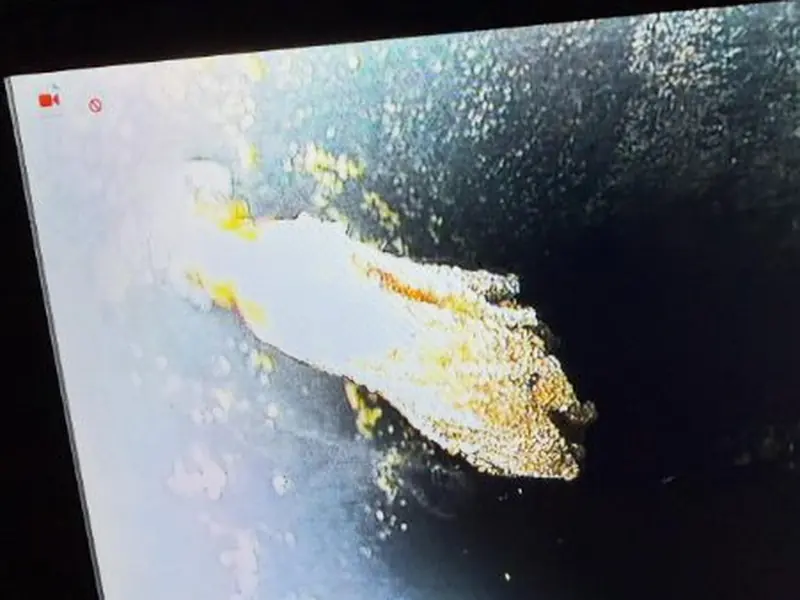
No sewer line repair should proceed without a camera inspection. The inspection confirms the pipe material, locates the exact failure point or blockage, identifies whether the pipe is intact or structurally compromised, and documents the condition before any work begins. In Castle Rock, the Town of Castle Rock Development Services requires a camera inspection report for open-cut sewer line repair permits that involve excavation in public rights-of-way.
The inspection images also determine which repair method is appropriate. A pipe showing root intrusion at a single joint with otherwise intact structure is a candidate for targeted spot repair or trenchless lining. A pipe showing multiple offsets, sections of collapse, or severe Orangeburg deterioration requires more extensive work, and the cost of a full repair estimate depends on what the camera finds.
Sewer line repair options in Castle Rock
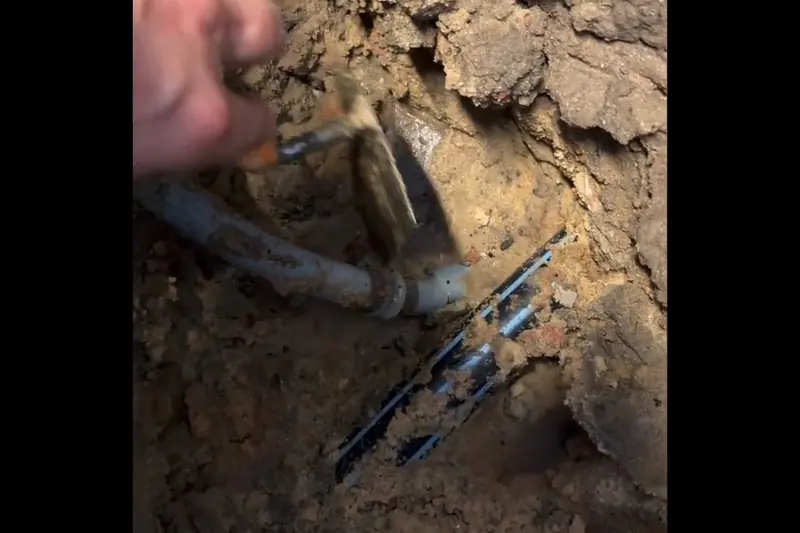
Spot repair (open cut). When the camera locates a single damaged section, the soil is excavated at that point, the damaged pipe is removed and replaced, and the excavation is backfilled. This is the most direct method for a localized failure and avoids disturbing the rest of the line. Permits are required for any excavation that crosses a public sidewalk or enters a public right-of-way.
CIPP lining (cured-in-place pipe). A flexible felt liner impregnated with resin is pulled or inverted into the existing pipe and inflated to press against the pipe walls. The resin cures (either with heat or UV light) to form a smooth new pipe wall inside the old one. The method requires only small access pits at each end of the lined section rather than a trench the length of the line. CIPP is suitable for pipes with joint gaps, minor cracks, and root intrusion where the host pipe has sufficient structural integrity to support the liner during installation.
Pipe bursting. A bursting head is pulled through the existing pipe, fragmenting it outward while simultaneously pulling a new HDPE pipe into position. The result is a new pipe in the same alignment as the old one, without a full-length trench. Pipe bursting works well for clay, cast iron, and PVC lines of moderate length and is particularly effective when the old pipe needs upsizing.
Permits for sewer line repair in Castle Rock
The Town of Castle Rock Development Services issues plumbing permits for sewer line work within the city limits. Work within public rights-of-way (under streets, across sidewalks, within utility easements) requires additional right-of-way permits and restoration requirements. Unincorporated Douglas County properties fall under Douglas County Building and Inspection.
Castle Rock Plumbing Pros manages the permit process as part of the job. Inspections are coordinated with the relevant jurisdiction and the work site is restored to the required standard upon completion.
Sewer line repair costs in Castle Rock
| Service | Typical Range |
|---|---|
| Camera inspection and report | $200 to $400 |
| Spot repair (open cut, single location) | $1,500 to $3,500 |
| CIPP lining (per foot) | $80 to $150/ft |
| Pipe bursting (per foot) | $100 to $175/ft |
| Root clearing with hydro jetting | $400 to $800 |
Ranges for Castle Rock and Douglas County residential work. Final scope based on camera findings, access conditions, and line length. Written estimate after camera inspection.
Frequently asked questions: sewer line repair in Castle Rock
Multiple slow drains in different parts of the house, sewage backing up through floor drains or toilets, gurgling sounds from drains when other fixtures run, and wet spots in the yard over the sewer line route are the primary indicators. A camera inspection confirms whether the issue is a blockage (treatable with cleaning) or a structural problem requiring repair.
The three main causes in Castle Rock are tree root intrusion (particularly from cottonwood and established shade trees near Downtown and Plum Creek), joint separation or offset from Pierre Shale soil movement, and age-related deterioration of clay or Orangeburg pipe in pre-1975 homes. Newer PVC sewer lines in 1990s and later construction are not immune to root intrusion but rarely show the structural failure seen in older pipe materials.
Trenchless sewer repair includes two main methods: pipe bursting, which pulls a new pipe through the old one while fragmenting the old pipe outward, and CIPP (cured-in-place pipe) lining, which installs a resin-impregnated liner inside the existing pipe that cures into a smooth new pipe within the old one. Both methods require only small access pits rather than a full trench. They are available in Castle Rock for lines in suitable condition, as determined by camera inspection.
Standard homeowner's policies typically exclude sewer line repair for gradual deterioration or root intrusion. Sudden damage from a covered peril (such as a collapse caused by a tree fall) may be covered. Some insurers offer sewer service line coverage as an add-on. Review your policy's exclusions and consider adding sewer line coverage if your home has older pipe. Castle Rock Plumbing Pros can provide a camera inspection report and repair scope for your insurer.