Why Castle Rock pipes freeze and where they fail first
Castle Rock sits at 6,202 feet above sea level. Sub-zero overnight lows are a regular part of the winter calendar here, not an occasional event. The February 2021 Polar Vortex pushed temperatures below zero for four consecutive nights across Douglas County, generating more frozen pipe calls in 72 hours than in the prior three winters combined. The December 2022 bomb cyclone brought temperature drops of 40 to 50 degrees Fahrenheit in less than 12 hours, catching properties that had been fine the night before.
The pipe locations that fail first in Castle Rock are predictable. Supply lines routed through exterior garage walls freeze when garage temperatures drop with the ambient air, particularly when the garage door is left open during cold snaps. Pipes in uninsulated crawl spaces under homes that sit on pier-and-beam or partial foundations lose protection when outdoor temperatures stay below 20 degrees for extended periods. Outdoor hose bibs and the supply lines feeding them are the single most common freeze point in Castle Rock, particularly in homes where a garden hose was left connected going into winter.
Homes built in the 1990s through the 2000s in Founders Village, Castle North, and older Downtown Castle Rock sections frequently have minimal insulation in the exterior wall bays where supply lines run. Newer construction in Crystal Valley Ranch and Cobblestone Ranch tends to have better insulation but is not immune when temperatures hold below zero for multiple nights.
What happens during a frozen pipe repair visit
The repair process begins with locating the frozen section. If the affected faucet is known and accessible pipes are visible, the freeze location is often identifiable by feel or by the presence of frost on the exterior of the pipe. When the pipe is inside a wall or ceiling, acoustic and thermal tools help narrow the location without opening drywall unnecessarily.
Thawing is done with controlled heat: heat guns, heating pads, or infrared heat lamps directed at the frozen section. The faucet at the affected fixture is opened before thawing begins so pressure can release and water can flow as the ice melts. Open flame is never used near pipe fittings or wall materials.
Once thawed, the pipe and fittings are inspected for cracks, splits, or separated joints. A pipe that has already burst or cracked under the ice expansion is repaired or replaced before water is restored. If the access point is a finished wall, we cut minimally and note the opening size for drywall patching.
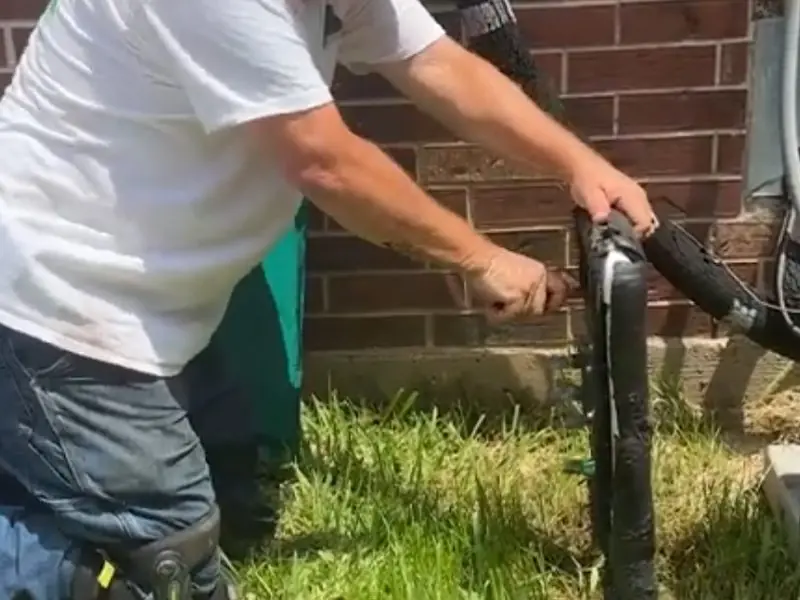
When the situation calls for it, heat tape is applied to the repaired pipe section and nearby vulnerable runs. Self-regulating heat tape is the preferred option for most Castle Rock applications because it automatically adjusts its output based on ambient temperature, reducing the fire risk associated with older constant-wattage products.
Frozen hose bibs and exterior faucets
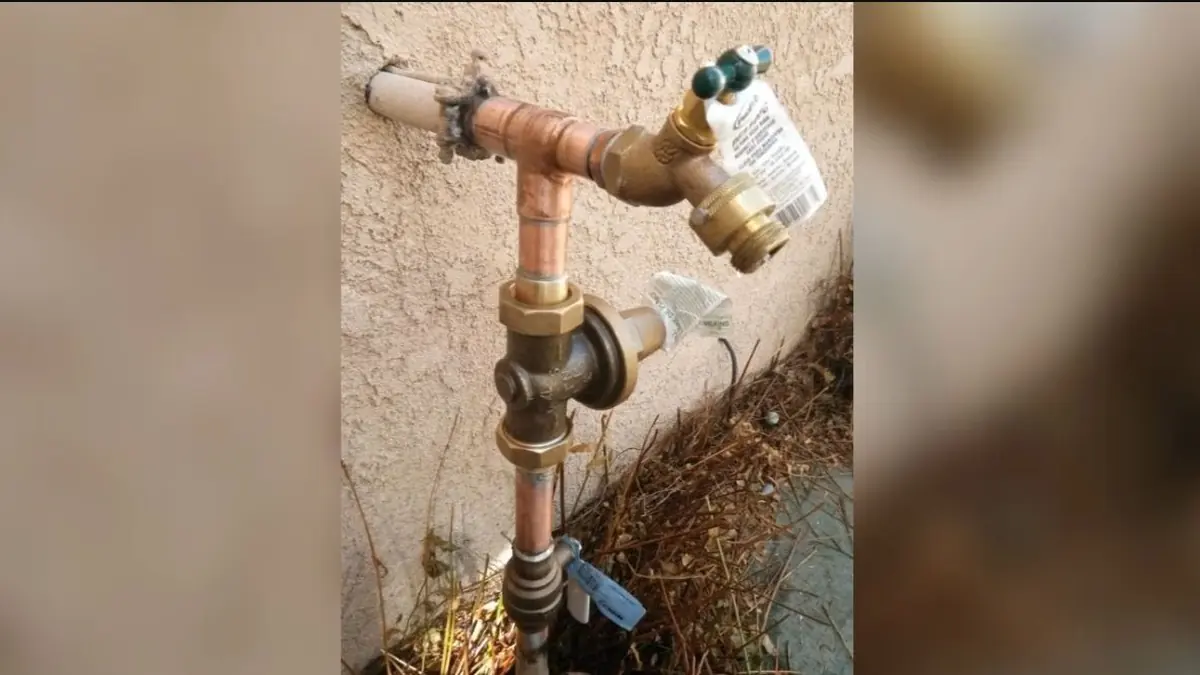
Frost-free hose bibs have a long stem that keeps the water shutoff point several inches inside the exterior wall, where temperatures stay above freezing. They are standard in most post-2000 Castle Rock construction. The limitation is that they only work as designed when no hose is connected during freezing temperatures. A garden hose left on a frost-free bib traps water in the stem and allows it to freeze, defeating the frost-free design entirely.
Standard hose bibs without a frost-free stem are found in some older Castle Rock homes and are prone to freeze damage even without a hose attached. Replacement with a frost-free unit, combined with a functioning interior shutoff to the bib, eliminates most hose bib freeze calls.
Frozen pipe repair costs in Castle Rock
| Situation | Typical Range |
|---|---|
| Frozen supply line, thaw only (accessible) | $150 to $350 |
| Frozen supply line with inspection and heat tape | $250 to $500 |
| Burst supply line repair (open access) | $300 to $700 |
| Burst pipe repair inside finished wall | $500 to $1,200 |
| Frost-free hose bib replacement | $150 to $300 |
| After-hours emergency rate addition | $75 to $200 |
Prices are approximate ranges for Castle Rock and Douglas County based on standard residential work. Final pricing depends on pipe location, access, and materials. Quote given before work begins.
Frequently asked questions: frozen pipes in Castle Rock
A frozen pipe typically shows up as reduced or no flow at a specific fixture when surrounding fixtures work normally. A burst pipe usually causes a sudden drop in pressure across the house, often accompanied by the sound of running water, wet spots, or visible moisture. Many pipes freeze and then burst during the thaw cycle, so the distinction becomes academic if you hear water running or see wet drywall.
You can apply gentle heat to accessible pipes using a hair dryer, heating pad, or heat lamp on low setting. Never use an open flame. Always open the faucet before applying heat so steam and water can escape as the ice melts. If the pipe is inside a wall or ceiling, not visible, or if you are unsure where the frozen section is, call a plumber. Mishandling a frozen pipe in this situation accelerates the burst risk.
Supply lines in exterior garage walls, pipes in uninsulated crawl spaces, and outdoor hose bibs are the most common freeze points in Castle Rock. Homes with minimal insulation in the garage wall bay, particularly those built in the 1990s in neighborhoods like Founders Village and Castle North, are more prone than average when January temperatures fall below zero.
Standard homeowner's policies typically cover sudden water damage from a burst pipe, including repair of the pipe and water damage to floors and walls. Gradual leaks or neglect are usually excluded. Document the damage and contact your insurer before cleanup if possible. Castle Rock Plumbing Pros can provide a repair scope and estimate for your claim.
A frozen supply line that is caught before it bursts typically costs $150 to $450 to thaw and inspect. If the pipe has already burst, repair or replacement adds $200 to $600 depending on pipe access. Pipes inside finished walls or ceilings are more expensive to reach than those in open garage bays or crawl spaces.