Common water heater problems in Castle Rock homes
Water heater failures in Castle Rock tend to cluster around a predictable set of issues shaped by the local water supply, altitude, and building stock age. Castle Rock Water delivers hardness in the 120 to 180 parts per million range depending on the source blend in use. That hardness leaves calcium and magnesium deposits that accumulate on tank liners and heating elements faster than in softer water areas. At the same time, gas appliances at 6,202 feet run on a leaner air-to-fuel mixture than at sea level, which affects combustion efficiency and pilot reliability.
No hot water. In gas units, a dead pilot light, failed thermocouple, or faulty gas valve is the first diagnostic path. In electric units, the upper or lower heating element or the thermostat is the likely cause. Both types can also fail due to a tripped thermal cutoff from a prior overtemperature event.
Insufficient hot water or slow recovery. Sediment accumulation on the bottom of the tank insulates the burner from the water, extending recovery time. A scaled heating element does the same in electric units. An undersized tank for household demand is another cause.
Popping or rumbling during heating cycles. Sediment trapped in the tank base boils when the burner fires, creating the noise. Castle Rock homes that have not had a sediment flush in several years are especially prone. The noise is a warning that tank liner integrity may be at risk if flushing is further delayed.
Leaking from the tank or fittings. Leaks at the cold supply or hot outlet fittings are usually repairable without tank replacement. Leaks from the T&P (temperature and pressure relief) valve may indicate overpressure or a failed valve. Leaks from the tank body itself, particularly at or near the bottom, indicate liner failure and require tank replacement.
Discolored or foul-smelling water. Rust-colored hot water points to anode rod depletion. Sulfur smell in hot water, particularly in homes with private wells, typically means the existing anode rod is reacting with the water chemistry and needs replacement with a zinc or powered anode.
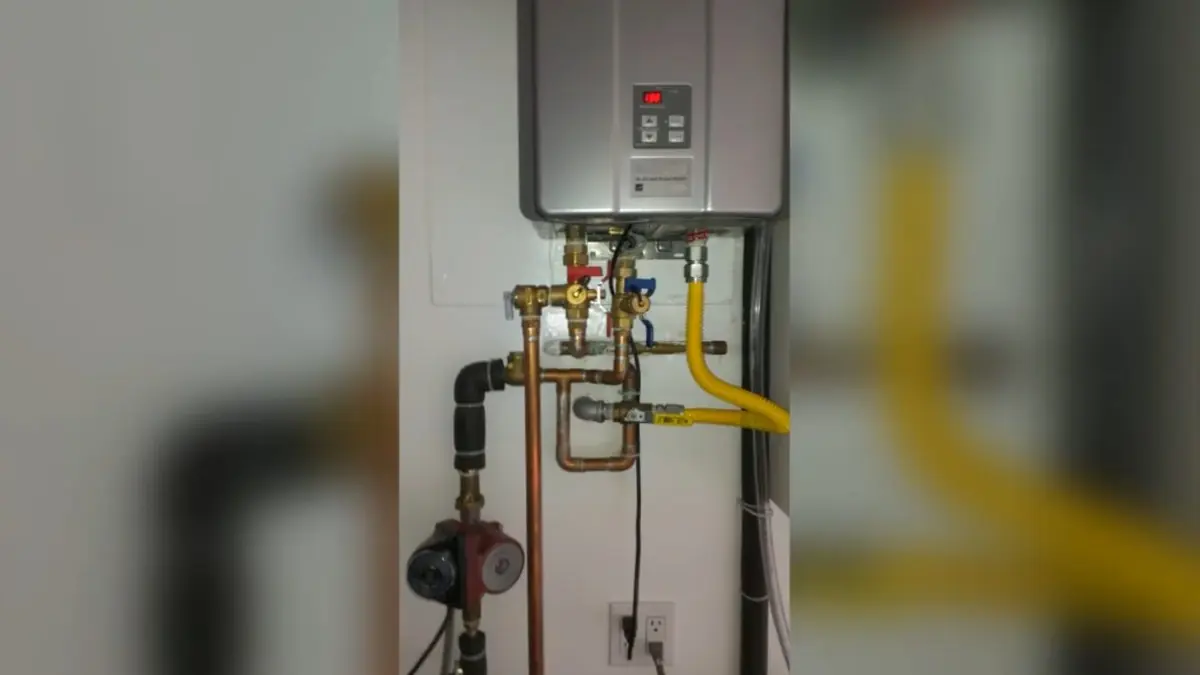
How Castle Rock water hardness and altitude affect water heaters
Castle Rock Water draws from both Plum Creek surface water and Denver Basin groundwater depending on seasonal availability and demand. The blend varies, but hardness consistently runs in the moderate-hard range. Calcium carbonate deposits at this hardness level are visible inside tanks within two to three years without annual maintenance, and by year five or six a tank without regular flushing will begin showing measurable efficiency loss.
Anode rods in Castle Rock tanks tend to deplete faster than manufacturer estimates based on softer water markets. A rod that a manufacturer expects to last 4 to 6 years in Phoenix or Denver may need inspection by year 3 in Castle Rock. An exhausted anode leaves the tank liner exposed to the electrochemical corrosion it was designed to prevent, and rust-colored hot water is the first visible result.
Gas combustion at altitude is leaner by default. Appliances manufactured for sea-level natural gas input run slightly cool at 6,200 feet unless adjusted for the lower oxygen partial pressure. A water heater that is working hard to maintain temperature while running on a lean mixture cycles more often, stresses the thermocouple sooner, and may show inconsistent pilot behavior in cold weather when draft conditions through the flue change.
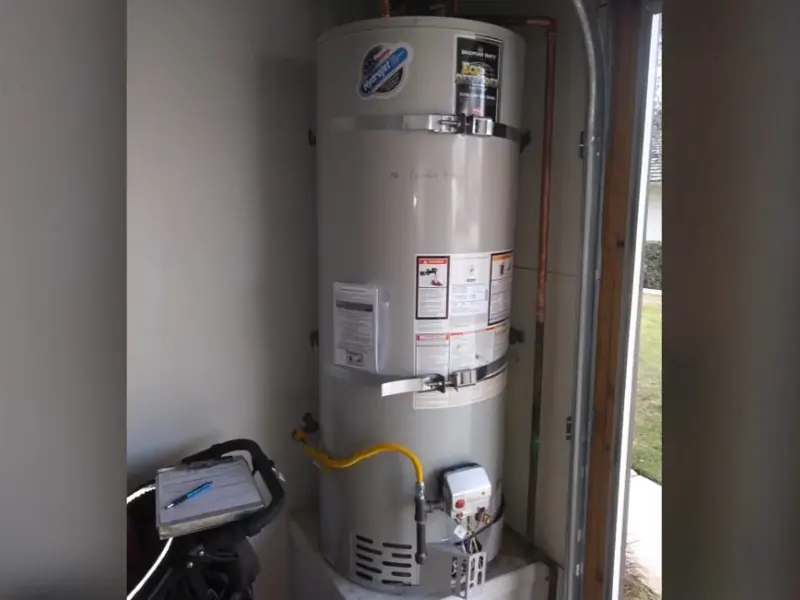
Repair versus replacement in Castle Rock
The decision between repairing a water heater and replacing it comes down to age, the nature of the failure, and the cost relationship between the two. A unit under 8 years old with a single component failure (thermocouple, anode rod, T&P valve, heating element) is almost always worth repairing. A tank over 10 years old in Castle Rock, particularly one that has not had regular maintenance, is approaching the end of its practical service life at the same time its hard-water damage is compounding. Paying for a major repair on a tank that is likely to fail again in the next year or two rarely pencils out compared to a replacement with a more efficient unit and a new warranty.
Tanks that are actively leaking from the body are never repairable. Liner perforation, regardless of how small, will progress, and water that reaches insulation and surrounding structure creates mold and drywall damage on top of the repair cost.
Water heater repair costs in Castle Rock
| Repair | Typical Range |
|---|---|
| Thermocouple replacement (gas) | $100 to $220 |
| Pilot assembly or gas valve | $150 to $400 |
| Heating element (electric) | $120 to $280 |
| Anode rod replacement | $100 to $250 |
| T&P relief valve replacement | $100 to $220 |
| Sediment flush service | $80 to $160 |
| Inlet/outlet fitting replacement | $80 to $180 |
Prices are approximate ranges for Castle Rock and Douglas County. Diagnosis fee applies and is applied toward repair cost. Final pricing provided before work begins.
Frequently asked questions: water heater repair in Castle Rock
Tank-style gas water heaters typically last 8 to 12 years in Castle Rock. Castle Rock Water's 120 to 180 ppm hardness accelerates sediment buildup and anode rod depletion compared to softer water areas, which can push units toward the lower end of that range without annual maintenance. Annual sediment flushes extend lifespan noticeably.
Popping and rumbling during heating cycles almost always means sediment has accumulated on the bottom of the tank. The noise is water trapped under the sediment layer boiling and escaping. Castle Rock's hard water accelerates this buildup. A sediment flush, if done annually, prevents this from progressing to the point where the tank lining is damaged.
At 6,202 feet, cold incoming water is colder than at lower elevations from October through April. A gas water heater set to 120 degrees F needs to work harder to heat very cold incoming supply, which reduces effective first-hour capacity. Most Castle Rock homes benefit from a slightly higher thermostat setting in winter or a larger tank than the manufacturer's recommendation for the same household size at sea level.
If the unit is under 8 years old and the repair is a single component such as a thermocouple, T&P valve, or anode rod, repair is usually the right call. If the tank is leaking from the bottom or shows rust-colored water that persists after flushing, replacement is the only option. If the unit is over 10 years old and requires a major repair, replacement is often the better value because a failing tank rarely fails just once.