Castle Rock's water hardness and what it does to your home
Castle Rock Water delivers municipal water at 120 to 180 parts per million hardness, placing it in the moderate-hard range on the standard hardness scale. The specific blend varies depending on seasonal availability and whether the source is Plum Creek surface water, Denver Basin groundwater, or treated water from other sources in the distribution network. At these hardness levels, tangible effects accumulate in the home over time.
Water heaters accumulate calcium sediment on the tank bottom and heating element surfaces faster in Castle Rock than in soft-water markets. A Castle Rock water heater that is not flushed annually will show measurable efficiency loss within three to four years and may fail prematurely due to scale-related liner damage. Tankless water heaters require annual descaling to maintain heat exchanger performance. Faucet aerators clog on a two-to-three year cycle. Dishwashers and washing machines show scale deposits on internal components faster.
Visible effects include white calcium deposits around faucets and showerheads, water spots on glass and tile shower surfaces, and occasionally a dry or itchy sensation on skin and hair after bathing. These effects are characteristic of moderate-hard water and are addressed by a properly sized water softener.
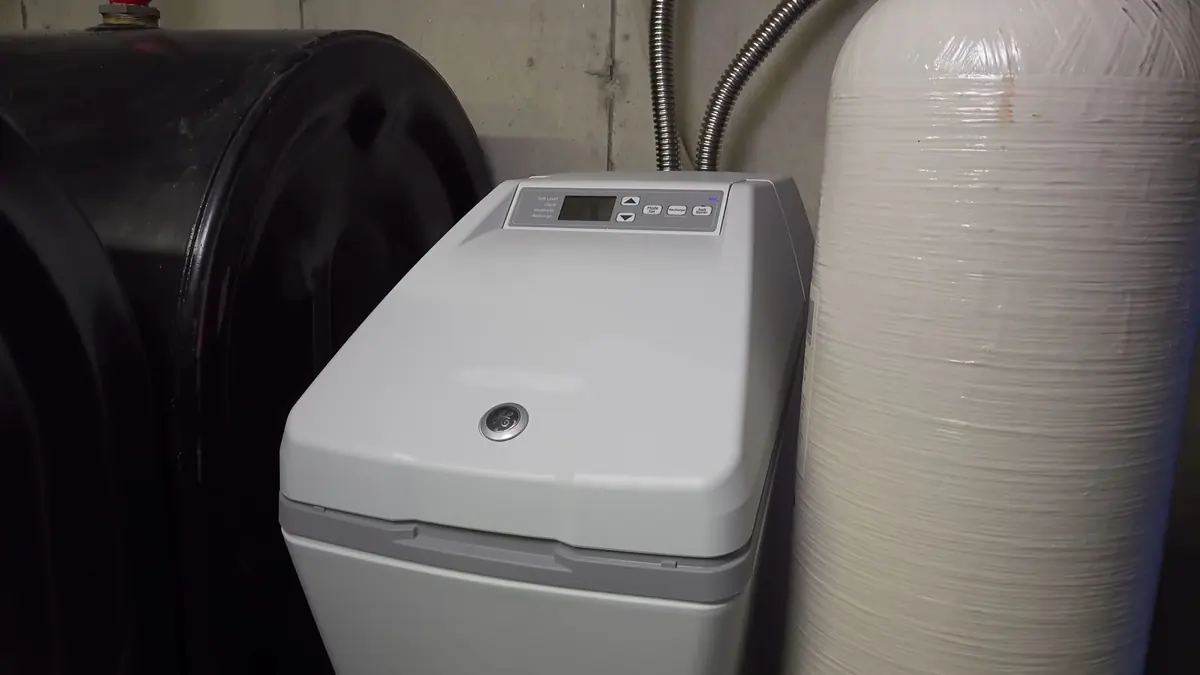
Ion exchange water softener installation
A salt-based ion exchange water softener is the standard whole-home solution for Castle Rock's hard water. The system consists of a mineral tank containing ion exchange resin and a brine tank containing salt. Hard water passes through the resin bed, where calcium and magnesium ions are exchanged for sodium ions. The result is genuinely soft water at less than one grain per gallon delivered to all fixtures in the home.
The resin bed periodically regenerates by flushing with a concentrated brine solution from the salt tank, which recharges the resin with sodium and flushes the captured calcium and magnesium to drain. Modern demand-initiated systems regenerate based on actual water use rather than a fixed schedule, reducing salt consumption and wastewater compared to older timer-based units.
Installation involves connecting the system to the cold water supply before it branches to the water heater and fixtures, setting up a drain line for regeneration discharge, and configuring the control valve for the household's use volume and inlet hardness. A bypass valve is installed so the softener can be taken offline for service without interrupting house water supply. Most Castle Rock basement utility rooms accommodate the installation well.
Salt-free water conditioners for Castle Rock homes
Salt-free template-assisted crystallization (TAC) conditioners are an alternative for homeowners who prefer not to add sodium to their water or to discharge brine during regeneration. These systems do not remove hardness minerals but convert the calcium carbonate into a micro-crystal form that does not adhere to surfaces as scale. The minerals remain in the water and pass through fixtures and appliances without depositing.
TAC systems require no salt, no electricity, no drain connection, and regenerate nothing. They are lower maintenance than ion exchange systems. The tradeoff is that they do not soften the water in the traditional sense: hardness mineral content is unchanged, so the skin and hair effects of hard water persist, and the water will still show a slight mineral concentration on evaporated surfaces. For homeowners whose primary concern is appliance protection rather than the feel of the water, TAC conditioners are a viable option.
Water softener costs in Castle Rock
| Service | Typical Range |
|---|---|
| Ion exchange softener install (32K–48K grain) | $1,200 to $2,200 |
| Ion exchange softener install (64K grain) | $1,600 to $2,800 |
| Salt-free TAC conditioner installation | $900 to $1,800 |
| Annual softener service | $120 to $250 |
| Resin bed replacement | $300 to $600 |
| Control valve repair | $150 to $400 |
Ranges for Castle Rock and Douglas County. Free estimate includes inlet hardness measurement. Annual service plan available.

Frequently asked questions: water softeners in Castle Rock
Castle Rock Water delivers water at 120 to 180 parts per million hardness, which falls in the moderate-hard range. At that level, hardness accelerates scale buildup in water heaters, reduces tankless heater efficiency, causes calcium deposits on fixtures, and can affect skin and hair compared to soft water. Whether softening makes sense depends on the homeowner's priorities. Most Castle Rock homeowners with water heaters over 5 years old, tankless units, or significant fixture staining find water softening cost-effective.
Sizing a water softener for a Castle Rock home depends on household size and inlet hardness. A family of four with water at 150 ppm typically needs a 32,000 to 48,000 grain capacity unit regenerating every 5 to 7 days. Homes with more occupants or at the higher end of Castle Rock's hardness range benefit from a 64,000 grain unit. Castle Rock Plumbing Pros measures inlet hardness before recommending a system size.
A salt-based ion exchange softener removes hardness minerals (calcium and magnesium) from the water by replacing them with sodium ions. The result is genuinely soft water, typically at less than 1 grain per gallon. A salt-free conditioner (TAC or template-assisted crystallization) does not remove hardness but converts the calcium into a crystal form that does not adhere to surfaces as scale. Salt-free systems reduce scale formation without adding sodium to the water, which matters for homeowners on sodium-restricted diets or those who prefer not to discharge brine during regeneration.
A salt-based water softener in a Castle Rock home typically needs annual service including a resin bed cleaning, brine tank inspection, and control valve check. Salt refilling is a homeowner maintenance task and frequency depends on system size and household use, typically every 6 to 10 weeks for an average Castle Rock family of four. The resin bed itself lasts 10 to 20 years under normal conditions.