Water filtration for Castle Rock municipal and well water
Castle Rock Water's municipal supply meets all EPA Safe Drinking Water Act standards. The water is treated with chlorine or chloramine for disinfection, and Castle Rock Water publishes an annual Consumer Confidence Report documenting the testing results. For Castle Rock homeowners on the municipal system, filtration is a preference choice, not a safety requirement. The most common reasons residents choose to add filtration are the taste and odor of residual disinfectant in the tap water, a preference for lower dissolved solids in drinking water, or a desire for protection from future supply variation.
For homes in the unincorporated Douglas County communities of Sedalia, Larkspur, Franktown, and the rural areas east of Castle Rock, private well water is the source. Well water quality in Douglas County varies significantly. It can contain elevated total dissolved solids, nitrates, coliform bacteria, or other compounds that municipal treatment addresses but well water does not. Filtration for well water homes is often a more substantive investment that addresses actual quality concerns rather than aesthetic preferences.
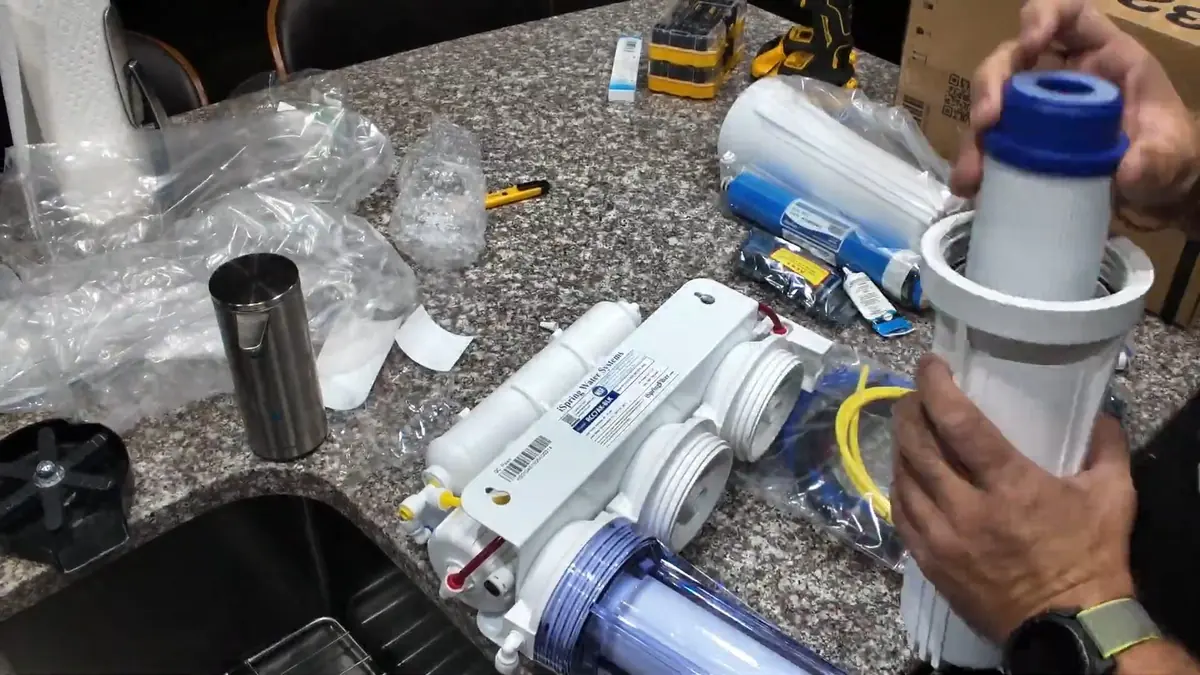
Water filtration systems installed in Castle Rock
Whole-home carbon filtration. A whole-home activated carbon filter installed on the main supply line treats all the water that enters the home. Carbon filtration removes chlorine and chloramines (the taste and odor source in treated municipal water), reduces certain volatile organic compounds, and improves the overall taste profile of the water. These systems are low maintenance, requiring filter cartridge replacement annually or every 2 to 3 years depending on the media and flow volume.
Reverse osmosis drinking water systems. An under-counter reverse osmosis system treats water at the kitchen sink only, producing very low total dissolved solids water for drinking and cooking. A 5-stage system typically includes a sediment pre-filter, carbon pre-filter, RO membrane, polishing carbon post-filter, and a storage tank. Water is dispensed through a dedicated faucet at the sink. Castle Rock's 120 to 180 ppm hardness is within normal operating range for standard RO membranes. RO systems remove hardness minerals, chlorine, fluoride, nitrates, and trace contaminants. Membranes typically last 2 to 4 years in Castle Rock conditions.
UV disinfection systems. Ultraviolet systems are installed on well water supplies to deactivate bacteria, viruses, and protozoa without adding chemicals. A UV system is typically installed after sediment and carbon filtration stages to ensure clarity before the UV chamber. For Castle Rock area well water homes, UV systems are the primary tool for managing biological contamination risk. They are not effective against dissolved chemical contaminants, heavy metals, or nitrates, which may require additional filtration stages.
Sediment filtration. A whole-home sediment filter (10 to 25 micron) is often the first stage in any multi-filter system. It removes sand, silt, and particulates that would clog downstream filters or reduce their effectiveness. For well water homes, sediment filters may need monthly cartridge changes depending on the well's yield characteristics.
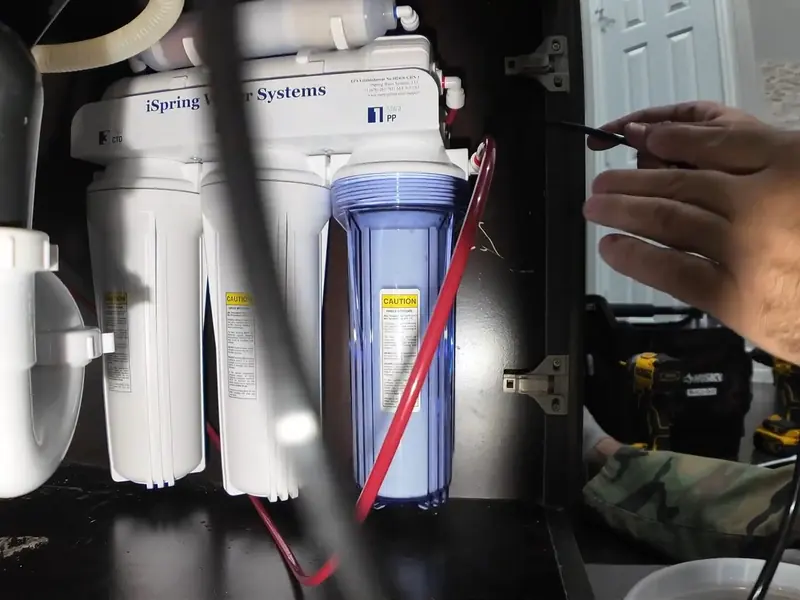
Filtration and softening combined
Many Castle Rock homeowners install both a water softener and a filtration system at different points in their water supply. The typical configuration places the water softener upstream (treating all water entering the home) followed by a point-of-use reverse osmosis system at the kitchen sink. The softener reduces scale throughout the home; the RO further reduces the TDS including the sodium introduced by the softening process, producing very pure drinking water. This combination addresses both the scale problem and the drinking water preference in one system.
For homes that prefer not to add sodium to their water through softening, a whole-home carbon filter combined with an RO at the kitchen sink is a common alternative that improves taste and provides high-quality drinking water without addressing whole-home scale.
Water filtration costs in Castle Rock
| System | Typical Range |
|---|---|
| Whole-home carbon filter installation | $400 to $900 |
| 5-stage RO system (kitchen sink) | $500 to $1,100 |
| UV disinfection system (well water) | $700 to $1,500 |
| Sediment pre-filter installation | $150 to $350 |
| Filter cartridge replacement service | $80 to $200 |
| RO membrane replacement | $150 to $300 |
Ranges for Castle Rock and Douglas County. Well water multi-stage systems quoted after water test review. Free estimates on all filtration installations.
Frequently asked questions: water filtration in Castle Rock
Yes. Castle Rock Water's municipal supply meets all EPA Safe Drinking Water Act standards and Castle Rock Water publishes an annual water quality report (Consumer Confidence Report). The water is treated, tested, and safe to drink from the tap. Some Castle Rock homeowners install filtration for taste and odor reasons (chlorine from treatment) or for added reduction of trace compounds, but filtration is a preference choice rather than a safety requirement for Castle Rock municipal water users.
For municipal water, a whole-home carbon block or activated carbon filter reduces chlorine taste and odor, which is the most common taste complaint with treated municipal water. For the highest quality drinking water at the kitchen sink, a 5-stage reverse osmosis system produces water low in dissolved solids including hardness minerals, chlorine, and trace contaminants. For homes on well water in Sedalia, Larkspur, or rural Douglas County, a UV system added after sediment and carbon filtration addresses biological contamination risk.
Yes. Reverse osmosis membranes handle Castle Rock's 120 to 180 ppm hardness without issue. The membrane removes dissolved minerals including calcium and magnesium, delivering low-TDS water to the dedicated kitchen faucet or refrigerator line. Some Castle Rock homeowners pair an RO system with a whole-home water softener; others use RO at the kitchen sink as the primary drinking water source without a whole-home softener.
Yes, and they complement each other well. A whole-home water softener addresses hardness throughout the house (appliances, fixtures, showers). A point-of-use reverse osmosis system at the kitchen sink provides purified drinking and cooking water by further removing TDS including the sodium added by the softener's ion exchange process. Many Castle Rock homeowners who install a water softener also add an RO at the kitchen faucet for drinking water.