How tankless water heaters work and what Castle Rock changes
Tankless water heaters heat water on demand rather than storing a tank full of hot water. Cold water flows through a heat exchanger whenever a hot-water fixture opens, and the unit fires its burner or energizes its elements to bring that water to temperature before it exits. When no hot water is needed, the unit is idle. The result is continuous hot water for as long as flow demand stays within the unit's rated capacity, with no recovery period like a tank-style heater requires.
In Castle Rock, two factors change the installation calculus versus lower-elevation markets. At 6,202 feet, gas combustion efficiency is reduced by approximately 20 to 25 percent compared to sea level because the air is less dense. A gas tankless unit sized for Denver or lower Front Range elevations will underperform in Castle Rock, particularly in January when incoming water temperatures are at their coldest and demand for temperature rise is highest. Units installed in Castle Rock should be sized using altitude-adjusted flow rate tables, and the burner combustion should be verified during commissioning.
Castle Rock Water's hardness in the 120 to 180 parts per million range is the other significant factor. The narrow passages in a tankless heat exchanger accumulate calcium deposits faster in hard water markets. Without annual descaling, a unit that performs well in year one will show degraded flow rates, error codes, and cold-water sandwiching within three to five years. Annual maintenance is not optional in Castle Rock's water conditions.
Selecting the right tankless unit for a Castle Rock home
Flow rate sizing. A Castle Rock home with two full bathrooms typically needs a gas tankless unit rated for at least 6 to 8 gallons per minute at a 70-degree temperature rise. Homes with three or more bathrooms, or where a master bath, secondary bathroom, and kitchen might run simultaneously, should look at 9 to 11 GPM units. The temperature rise requirement at Castle Rock's elevation is higher in winter than at lower elevations because groundwater temperatures fall further below the target delivery temperature.
Gas vs. electric. Gas tankless units are the standard choice for whole-home service in Castle Rock. They produce the flow rates and temperature rise that a full household needs, and natural gas costs less per BTU than electricity at Colorado utility rates. Electric tankless units work well as point-of-use applications, such as a dedicated unit for a garage workshop sink or a remote bathroom, but require significant electrical panel capacity for whole-home duty and face efficiency limitations at altitude.
Venting requirements. Atmospheric venting of gas tankless units is not recommended above approximately 4,500 feet because reduced atmospheric pressure weakens natural draft. Power-vent (fan-assisted) or direct-vent (sealed combustion with dedicated air intake) configurations are preferred in Castle Rock. Direct-vent units are the most reliable option for basement installations where combustion air supply can be limited.
Condensing vs. non-condensing. Condensing tankless heaters recover heat from exhaust gases and achieve higher efficiency ratings. They also require a condensate drain. For Castle Rock installations, condensing units often make sense from an operating cost perspective, though the installation is slightly more complex.
Annual descaling and maintenance in Castle Rock
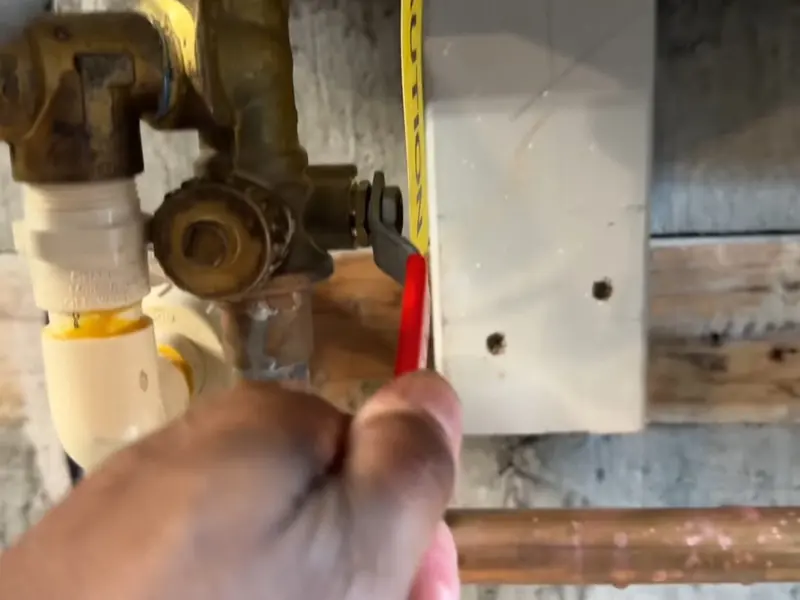
Descaling a tankless water heater involves circulating a dilute acid solution (typically citric acid or white vinegar) through the heat exchanger using a small pump connected to the service ports. The acid dissolves calcium deposits that have formed on the heat exchanger walls and passages. The process takes 45 to 90 minutes and is followed by a fresh-water flush before restoring service.
In Castle Rock's water conditions, annual descaling is the maintenance interval that keeps most units performing at specification. Homes with particularly hard water in specific distribution zones, or units that were not descaled on schedule, may benefit from a more aggressive descaling or from adding a water softener or filtration system upstream of the tankless unit.
Error codes on Rinnai, Navien, Noritz, and Bosch tankless units commonly appearing in Castle Rock include those indicating reduced flow or combustion issues, both of which can have scale accumulation as a root cause. Diagnosing error codes without addressing the underlying scale rarely produces lasting results.
Tankless water heater costs in Castle Rock
| Service | Typical Range |
|---|---|
| Gas tankless installation (6-8 GPM) | $2,200 to $3,800 |
| Gas tankless installation (9-11 GPM) | $2,800 to $4,500 |
| Annual descaling service | $150 to $300 |
| Tankless error code diagnosis and repair | $150 to $500 |
| Condensate drain installation | $100 to $250 |
Ranges include equipment and labor. Unit brand and condenser configuration affect cost. Free estimates on installations. Annual service plan available on request.
Frequently asked questions: tankless water heaters in Castle Rock
Yes, with proper altitude-rated equipment and annual descaling. Gas tankless units in Castle Rock need to be sized for both the ground-level flow rate demand and the reduced BTU delivery at 6,202 feet. Units sized correctly for the home and descaled annually to remove Castle Rock's hard water scale perform well for a decade or more.
Castle Rock Water runs at 120 to 180 parts per million hardness. Calcium deposits accumulate in the heat exchanger of a tankless unit over time, reducing its efficiency and eventually blocking flow through the narrow passages. Annual descaling with a vinegar or citric acid flush is recommended for Castle Rock tankless units. Units without regular descaling often develop error codes or reduced output within 3 to 5 years.
A Castle Rock home with two bathrooms and a standard kitchen typically needs a unit rated for at least 6 to 8 gallons per minute at a 70-degree temperature rise. Larger homes with three or more bathrooms, or layouts where multiple showers run simultaneously, should look at 9 to 11 GPM units. Temperature rise requirements are higher in Castle Rock because cold incoming water is significantly colder in winter than at lower elevations.
For whole-home demand, gas tankless units are the standard choice in Castle Rock. They deliver high flow rates and recover quickly. Electric tankless units work well for single-fixture point-of-use applications but require significant electrical panel capacity for whole-home service. At Castle Rock's elevation, gas combustion must be sized for altitude and the unit must have power venting or direct vent capability to handle reduced atmospheric draft.