Why water heater installation in Castle Rock requires altitude-specific decisions
At 6,202 feet above sea level, Castle Rock presents installation variables that do not appear in flat-land markets. Gas appliances run on leaner air-to-fuel mixtures at elevation because the available oxygen per cubic foot of air is approximately 20 percent lower than at sea level. A gas water heater rated for a specific BTU output at sea level delivers meaningfully less heat per hour in Castle Rock, which affects how quickly a tank recovers after a draw. Units that are adequate for a household of four at Denver elevations may run short of hot water for the same household in Castle Rock, particularly during morning peak demand.
At the same time, the incoming cold water in Castle Rock is genuinely cold from October through April, arriving at temperatures well below what a sea-level installation would see. This combination of reduced BTU delivery and colder incoming water means the effective first-hour rating of most tank-style heaters is lower in Castle Rock than the specification label suggests. Proper sizing accounts for both factors.
Castle Rock Water supplies the incorporated city through a closed plumbing system. The pressure reducing valve at each meter creates a closed loop between the PRV and the fixtures inside the home. When water heats and expands, it has no relief path back toward the main. Colorado Plumbing Code requires an expansion tank on closed systems, and the Town of Castle Rock's inspection process checks for this during the water heater permit review.
Choosing the right water heater for a Castle Rock home
Tank size. Most Castle Rock families of three or four people are well served by a 50-gallon gas tank. Homes with five or more occupants, or layouts where the laundry room, dishwasher, and primary bathroom are in high simultaneous use, often perform better with a 75-gallon unit. Going down to 40 gallons at this altitude is rarely appropriate for anything beyond a studio or one-person unit.
Gas vs. electric. In Castle Rock's utility environment, natural gas water heaters cost significantly less to operate per year than electric resistance tank heaters. Electric heat pump water heaters offer better efficiency but perform less well in cold basement environments, which describes most Castle Rock utility rooms for several months of the year. For most Castle Rock homes, gas is the preferred choice where gas service is available.
High-altitude gas rating. Many gas appliance manufacturers provide separate altitude specifications or require a de-rating procedure above 4,500 feet. Properly specifying a unit that is rated for Colorado Front Range elevations, or verifying that the burner assembly can be adjusted for elevation, is part of the installation process.
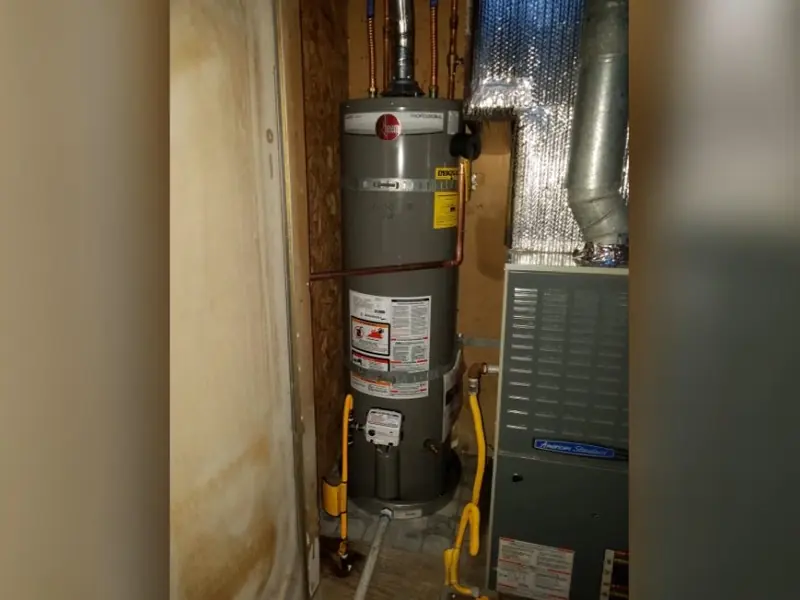
Venting. Most gas water heaters in Castle Rock's residential stock use atmospherically vented B-vent systems routed through the basement ceiling and out through the roof. At elevation, draft conditions change in ways that affect atmospheric vent performance on cold mornings. Sealed-combustion or power-vent units avoid this variability and are preferred for basements with limited combustion air supply.
Permits and inspections for Castle Rock water heater replacement
Water heater replacement in Castle Rock is a permitted plumbing job. The Town of Castle Rock Development Services issues plumbing permits for properties within the city limits; Douglas County Building and Inspection handles unincorporated properties. The permit covers the installation and triggers an inspection after the work is complete. The inspection verifies proper gas line connections, expansion tank presence, T&P relief valve discharge piping, and venting.
Castle Rock Plumbing Pros pulls the permit as part of the installation and coordinates the inspection scheduling. Homeowners who hire unpermitted labor for water heater replacement risk issues with insurance coverage for water damage claims and with the home sale inspection process.
Water heater installation costs in Castle Rock
| Installation Scenario | Typical Range |
|---|---|
| 50-gal gas unit, standard replacement | $1,200 to $2,000 |
| 75-gal gas unit, standard replacement | $1,500 to $2,400 |
| 50-gal electric unit, standard replacement | $900 to $1,600 |
| Expansion tank addition (if missing) | $150 to $350 |
| Permit fee (Town of Castle Rock) | $80 to $150 |
Ranges include equipment and labor. Unit brand and model affect cost. Permit fee is separate and disclosed upfront. Free estimates on planned installations.
Frequently asked questions: water heater installation in Castle Rock
At 6,202 feet, incoming cold water is colder than at sea level, which reduces the effective first-hour rating of any tank-style heater. A household of four that might use a 40-gallon unit at sea level often needs a 50-gallon tank in Castle Rock. Larger homes or those with high simultaneous demand should consider 75-gallon or larger units. The correct size depends on the number of occupants, fixture count, and whether a dishwasher and clothes washer run concurrently with showers.
Yes, in most cases. Castle Rock Water operates a closed plumbing system with pressure reducing valves at the meter. When water heats and expands in a closed system with no relief path, pressure spikes stress the T&P valve and tank connections. Colorado Plumbing Code requires an expansion tank when a PRV creates a closed system. Town of Castle Rock inspectors check for this during water heater permit inspections.
Yes. The Town of Castle Rock requires a plumbing permit for water heater replacement. For properties outside the incorporated city limits in unincorporated Douglas County, the permit comes from Douglas County Building and Inspection. Castle Rock Plumbing Pros pulls the permit and coordinates the inspection as part of the installation.
A standard tank-style water heater replacement in an accessible basement utility room typically takes 2 to 4 hours including draining the old unit, removing it, setting the new unit, making connections, and testing. Installations that require gas line modifications, expansion tank addition, or new venting may take longer. Permit inspection is scheduled separately after installation.